

If cycling were a rational sport—and we all know this madness is anything but—every pair of cycling shorts would come with a user manual. Not a quick fold-out leaflet, but a real one, with diagrams, warnings, and a bold line on the cover reading: “If you get this wrong, nothing else matters.”
Because it doesn’t matter how good your bike is, how many watts you produce, or how fancy your ultralight carbon saddle is. A bad pair of shorts can sour the most beautiful route in the world. And yet, we all know this, we keep buying them almost blindly—guided by the brand, the design, or just because “this pro uses them.”
Every rear end is a world unto itself, and they’re all different. Finding the perfect pair of shorts can be an Indiana Jones–worthy adventure.
Take the chamois, for instance. The holy chamois. Everyone talks about it as if it were the Holy Grail—eternal, unchanging. But chamois die. Not suddenly. They just fade away. One day you notice you’re moving more on the saddle. Another day you start feeling chafing or developing rashes. Eventually, it’s not just uncomfortable—it’s simply stopped doing its job. And don’t think that chamois creams will bring it back to life. Those creams help your skin, especially on very long rides, but they have no real effect on a dead chamois.
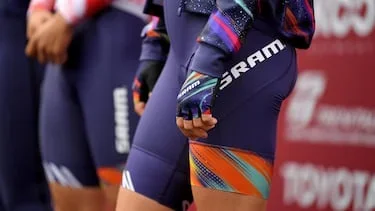
Not all chamois work for everything: your position, time in the saddle, and terrain vary by discipline—and the shorts must adapt to that.
A pair of shorts usually dies long before it “looks old.” But luckily, it gives you warning signs. First, you slide around a bit more on the saddle. Then you subconsciously adjust your pedal stroke to avoid a nagging discomfort. And finally, you have to accept the hard truth: your favorite shorts need to retire.
A good chamois is made primarily from polyurethane foam with different densities. It ages because a cyclist weighs, sweats, and spends hours sitting in the same spot, making the same movement. Moreover, not all chamois work for everything. A good ultra-distance short usually has a seamless chamois, anti-moisture treatment, larger ventilation channels, and high-density foam. A short for quick outings usually has medium- or low-density polyurethane. It’s thinner and breathes much better because you sweat more on intense rides. Manufacturers typically design road chamois for a more forward position on the saddle, with greater emphasis on perineal support, while in gravel and MTB, the priority is stability, vibration absorption, and freedom of movement. But there’s no universal formula or mandatory geometric difference. The classic mistake is to test a chamois in the store by squeezing it with your fingers.
Maybe it’s more useful to have a single conversation with someone who knows shorts, explain your real needs, and from that day on, use the model they recommend.
Although it sometimes takes a back seat, just as important as the chamois is that the shorts fit the body well. It doesn’t matter if the chamois is perfect—if the shorts don’t stay put, they’ll feel terrible. A comfortable short should never feel loose. It should not shift a single millimeter. And when you pedal, there should be no strange folds. If you have to adjust your shorts mid-ride, that’s a red flag. Either they’re too big, they’ve stretched out and are already dead—even if the chamois is still like new. And be careful with sizing. It’s not uncommon for a cyclist to wear a size smaller in…