
“I’m retiring this year.”
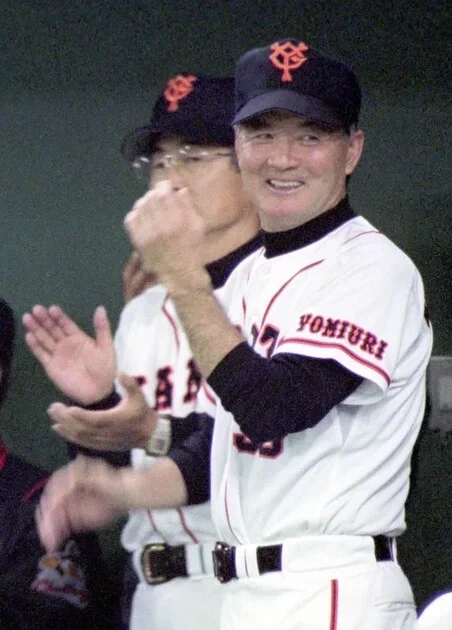
The first person I told was my wife, who had shared all the ups and downs with me. The second person was Shigeo Nagashima. I waited until the season was over to report it to him.
Unless you’re a top-tier player, I believe you shouldn’t say whether you’re quitting or not until the entire season is finished. So even though the Giants faced Orix in the Japan Series that year, I kept it quiet until it was over. But I didn’t want the team to tell me, “We won’t renew your contract.” That was my pride. I wanted to decide the end myself.
The day after I watched the Japan Series defeat on TV, I called the team representative and said, “I want to see Mr. Nagashima. I need to talk to him.” Then I contacted Nagashima directly.
It had been 10 years since I last visited his home, which was when I asked him to be my matchmaker.
“Mr. Nagashima, thanks to you, I was able to join the Giants and give it my all for 17 years. But I can’t keep up physically anymore. My body doesn’t move like it used to. Please let me retire this year.”
I think Nagashima already had a vague idea that I was no longer a key player, and when someone asks to talk right after the season ends, he probably had a good guess what it was about.
“Okay, I understand.”
Without saying much, Nagashima accepted my retirement request. Then immediately, he asked, “What will you do now?” showing concern for my future.
Even though I was 35, I had only ever done baseball. I knew nothing about society.
“I want to study society for a while, broaden my perspective. Eventually, I hope to return to the baseball world.”
“I understand. If anything troubles you, let me know.”
We talked for about an hour, not in the formal reception room but in his living room. It was the day after the Japan Series ended, so he must have been busy with interviews. Yet he made time for me. That really touched me.
As I was leaving, Nagashima said something like this:
“I’ve got presbyopia too. I have about 10 pairs of reading glasses at home. But I can’t wear them in front of people. It’s tough playing the role of Shigeo Nagashima.”
I realized then that he, too, felt he had to keep being “Shigeo Nagashima.” That there was a part he had to perform. I had never known that before.
“Until now, I may have been distant because of the manager-player relationship. But now you’re no longer my subordinate. Feel free to come to me as an equal, anytime.”
I’ll never forget his final words to me. Looking back, I think they were his farewell gift to a disciple starting his second life.
“From now on, you have to be conscious that you’re always being watched. You must act with the pride of a former Giants player.”
After retiring, I worked as a commentator on radio and TV. Every opportunity came through Nagashima’s introductions. Even after retirement, whenever we met, he’d say, “Use my name if you ever need to.”
In the early days of my media work, I often went to cover Nagashima during spring training. Honestly, I was struggling with the job at that time.
Every morning, Nagashima would walk around the athletics track. When he spotted me in the distance, he’d wave and call out, “Okazaki! Come here!” He’d let me walk beside him and chat about all sorts of things. The media would be filming from far away. Nagashima was fully aware of that. He deliberately made sure that “Okazaki is this close to Shigeo Nagashima” was broadcasted.
On the field during practice, media were supposed to stay behind the ropes, but he’d ignore that and wave me over. He’d even put his arm around my shoulder in front of the press, showing off more closeness than necessary. Each of these gestures was his subtle kindness, making sure I never felt awkward.
Thanks to this, the media came to know that “Okazaki has such a close relationship with Nagashima,” and that opened up many work opportunities for me. He might do the same for other former players, but Nagashima is the kind of person who thinks even about things like that.
Even after his health declined, when I became the second-team manager, he came to the Giants Stadium. When I became a first-team coach, he came to see me and offered words of encouragement. Even after I retired, he continued to look out for me without change.
Knowing that Nagashima was behind me gave me incredible strength in my post-playing life. He was my pillar of support. I can’t thank him enough.