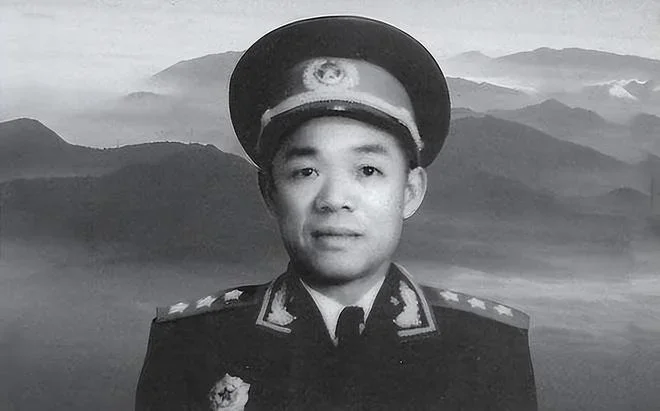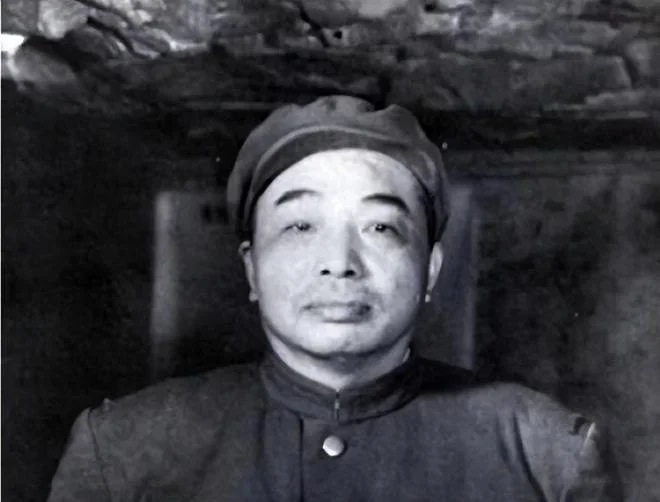
Among senior commanders of the People’s Liberation Army, Peng Dehuai was known for his notoriously tough and unyielding temperament. He could be as hard and cold as granite. Most people feared him—feared his stern gaze, his sharp tongue, and the shame of failing to meet his expectations. Yet, paradoxically, a select group of individuals didn’t flinch at his intensity. They dared to argue with him, laugh in his face, and even pull the tiger’s whiskers when his anger peaked. Instead of lashing out, Peng valued these men as trusted lieutenants. This connection wasn’t mere chemistry—it was a survival code forged in brutal warfare.
If we consider Peng Dehuai as the chief engineer of a massive military project, the ten generals he favored filled three critical gaps in his command system. Peng understood this equation better than anyone.
The first category was “cooling agents” and “safety valves.” Peng recognized his own fiery nature and tendency to rush decisions. He needed people who dared to speak truth, even to his face. Otherwise, disastrous mistakes could occur without anyone pulling him back.
**General Chen Geng** was such a character. A graduate of the first class at Huangpu Military Academy, Chen was a recognized tactical genius with a quirky sense of humor. In tense command rooms where others stiffened, Chen would joke and jest with Peng. Why did Peng tolerate this? Not just for comic relief. Chen’s humor was a high-level communication art. When battles became desperate and Peng’s blood pressure soared, Chen’s quips would “cool down” the atmosphere. More importantly, Chen used his lighthearted demeanor to solve tough problems with finesse.
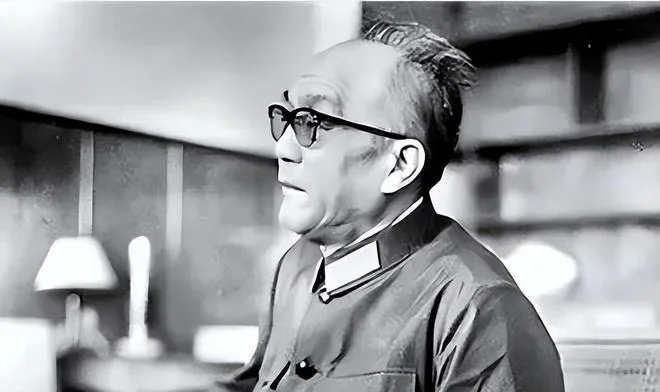
Another general Peng respected was **General Huang Kecheng**. If Chen used a soft approach, Huang countered with tougher iron. Nicknamed “Huang the Half-Blind,” he had a strategic mind rare among senior generals. It was Huang who first advocated seizing the Northeast after the Anti-Japanese War. Both Huang and Peng had similar temperaments—uncompromising and straightforward. Peng admired Huang for daring to argue over crucial decisions. In an era where one wrong move meant countless lives lost, Peng valued truth over saving face. He needed someone who would call him out.
The second category was “problem solvers in impossible situations.” Many battles Peng commanded were brutal and desperate—from outnumbered fights in the Northwest to confronting the U.S. military in Korea. He needed special talents to revive dead ends.
**General Hong Xuezhi** exemplified this. In Korea, the biggest nightmare for Chinese volunteers wasn’t tanks but starvation. With enemy aircraft constantly bombing supply lines, feeding and arming hundreds of thousands of troops seemed impossible. Peng pinned Hong as the logistics chief. Hong devised new supply tactics, creating an “indestructible steel transportation line” under intense “strangling warfare.” Peng’s reliance on Hong was genuine—knowing that as long as Hong was in charge, the frontline troops would have hot meals and bullets. This is why Hong later became the only “six-star general” (twice awarded the rank of general).
Similarly, **General Deng Hua** and **General Xie Fang** were indispensable. Fighting the UN forces required brains, not just courage. As first deputy commander, Deng Hua served as Peng’s “brain extension.” Peng’s command style was bold and broad, while Deng was meticulous with strategic depth. Peng praised him as “an excellent advisor in making plans.” Xie Fang, as chief of staff, was a graduate of a Japanese military academy and provided crucial intelligence analysis. Peng called him the “military Zhuge Liang.”
**General Han Xianchu** was Peng’s sharpest knife. Despite a humble origin, Han had a wild and fierce tenacity on the battlefield, earning the nickname “Han the Bold” and being feared by enemies as “Cyclone Commander.” When a battle stalled and someone needed to lead the charge, Peng’s first thought was always Han Xianchu—a man with execution ability in desperate situations.
The third category was “cornerstones” and “successors.” As a founding marshal who built his army from scratch, Peng valued old comrades who had fought through hell and those who could secure the rear.
**General Wang Zhen** was Peng’s most formidable general during the Liberation War. But Peng valued Wang not only for his fighting ability but also for his governance skills. When advancing into the Northwest, especially Xinjiang, Peng sent Wang to establish control. Wang’s First Army not only captured territory but also rooted there, acting as both a “fierce Zhang Fei” and a “good village head.” For Peng, having Wang guard the Northwest meant stability.
**General Gan Siqi** served as the political director when Peng served as both commander and political commissar of the First Field Army—a crushing burden. Gan quietly handled the massive administrative workload, allowing Peng to focus on combat. His low-key, upright role was the lubricant for the entire field army.
**General Zhang Aiping** and **General Xu Guangda** represented Peng’s respect for old comrades and new specialties. Zhang, a loyal and versatile veteran from the Red Third Army Corps, was both civil and military. Xu had repeatedly achieved victories in the Liberation War and later became the first commander of the new Chinese armored forces, known for his integrity. Peng admired Xu’s purity—loyalty to the party, responsibility for work, and no tricky politics.
Looking back, these ten generals—three senior generals, six full generals, and one junior general—had different personalities: some witty, some argumentative, some logistics experts, some tacticians, and some frontline fighters. But they shared one common trait: pragmatism. None earned their positions by flattery; all relied on solid combat records. Peng’s philosophy of personnel selection was essentially a practical battle manual. He didn’t fear a temper or individuality, not even insubordination. He feared only failure on the battlefield or sacrificing soldiers’ lives to please superiors. Peng accounted for this calculation throughout his life, remaining tough to the very end.