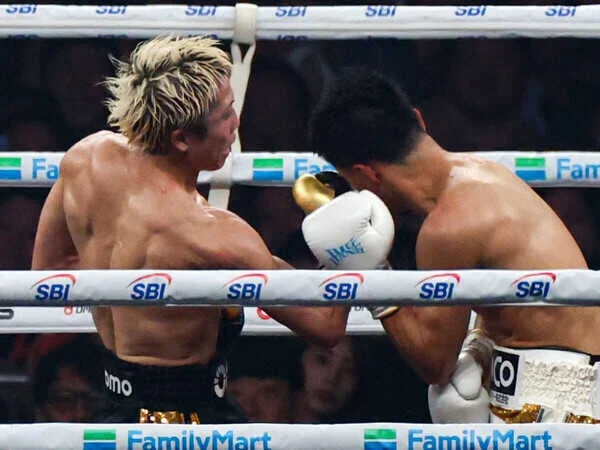
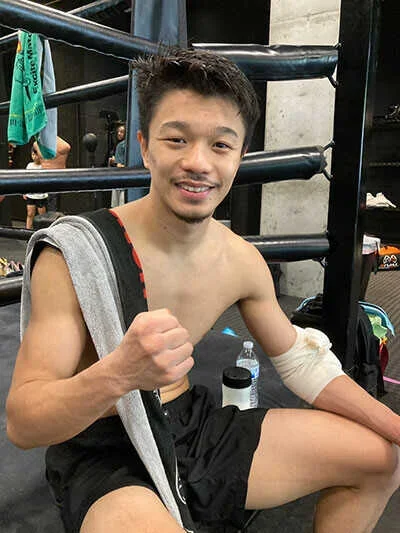
Former WBA/IBF light flyweight champion Ryoichi Taguchi, who shared the ring with Naoya Inoue back in August 2013 for the Japanese title, recently reflected on the epic clash between Inoue and Junto Nakatani at the Tokyo Dome. Now a 39-year-old retired fighter, Taguchi still maintains a physique reminiscent of his active days.
“It’s already been a week since Inoue vs. Nakatani, but the excitement lingers. I rarely watch a fight more than once, but this time I did. It was that special—I might even watch it again,” Taguchi said.
Taguchi recalled the opening rounds of the May 2 showdown. “Both fighters started cautiously, not throwing many punches. I thought they might engage more, but they knew one clean shot could end the fight. Inoue seemed to take control by the third or fourth round. His speed was superior. Nakatani probably struggled to execute his game plan; Inoue dominated him well. I had Inoue winning all rounds through the seventh.”
Checking the official scorecard, Taguchi agreed with judge Patrick Morley’s scoring. “The Inoue I fought is a completely different fighter now. He’s the pound-for-pound king who has reached a level far beyond. I’m glad I got to fight him, but he’s just too incredible. He’s improved multiple levels since our bout. I understand why Nakatani couldn’t attack early—even back at light flyweight, Inoue had monstrous power. Now he’s even stronger. If I faced him at super bantamweight, his punches would hurt even through a guard. Nakatani must have felt, ‘This is dangerous,’ and hesitated.”
Taguchi praised Inoue’s defense as well. “Inoue anticipated Nakatani’s counters and practiced slipping them before striking. Nakatani’s camp said they were surprised by Inoue’s footwork speed—I experienced that too, feeling like ‘Oh, he’s not there!’ The explosive footwork and rapid in-and-out movements made Nakatani miss. The same happened to me.”
He also commended the challenger’s performance. “Nakatani rallied in rounds 8, 9, and 10. Only a fighter of his caliber could push Inoue that hard at super bantamweight. That fight was a masterpiece—36 minutes of elite boxing. There were moments when they moved in ways only they could understand, making me think, ‘No one else could do this.'”
Taguchi highlighted a sequence in round 8 where Nakatani slipped Inoue’s short right and countered with a left hook and right hook, but Inoue dodged with body movement. “The mutual respect was evident; they even smiled at each other. It made me wonder, ‘Who else in the world can perform like this?’ That fight showcased top-tier movement. After the final bell, they embraced with smiles. The level of Japanese boxing was on full display for the world.”
The former two-division champion was especially blown away by Inoue’s instinctive uppercut. “In round 11, Inoue missed a right straight, then shifted his back foot forward and landed a left uppercut. I’ve never seen that before—it was like instinctual movement, not something you can train. I occasionally experienced my body moving on its own during my career, and that’s what happened to Inoue. It was incredible.”
That uppercut broke Nakatani’s left orbital bone, forcing him to fight with one eye for the remainder of the bout. “Overall, Inoue outclassed Nakatani. He was a step ahead. This fight showed boxing at its finest. Inoue has cemented himself as one of the best ever. He said he wants to move up to featherweight, and I believe he can unify titles there too. He’d become the greatest in history. Who can take seven rounds from Inoue? It’s hard to imagine. Even WBO featherweight champion Rafael Espinoza might struggle; Inoue has the edge.”
Despite the defeat, Taguchi sees a bright future for Nakatani. “He gave 120 percent and said he had no regrets. That tells me he’ll make a huge leap. He’ll grow stronger and eventually challenge for the pound-for-pound top spot. Defeats can shape a fighter, and this loss will make him better. His mindset, deep thinking about boxing, and dedication—like completing 192 rounds of sparring in LA—are unmatched. Most fighters would break under that load.”
Taguchi also mentioned Nakatani’s unique training method of hitting three heavy bags in a three-minute round. “His training is beyond what Japanese boxing typically sees. If Inoue moves up, Nakatani will dominate super bantamweight. He’s about to enter his prime. I personally like him as a fighter and will support him. If both want a rematch, that would be great—Nakatani seek revenge, while Inoue might want to prove his dominance again. I’m already satisfied with that one fight, though. I’m grateful to both for giving us such a memorable bout.”
Ryoichi Taguchi, born December 1, 1986, in Tokyo, turned pro in 2006 and won the All-Japan Rookie of the Year in 2007. He captured the Japanese light flyweight title in 2013, the WBA belt in 2014, and unified the IBF title against Milan Melindo in 2017. He retired in 2019 with a record of 27 wins (12 KOs), 4 losses, and 2 draws.